

Hire + Retain Black Teachers. – Black Paper

The data shared in this report is intended to inform our community about the crucial need for Pflugerville ISD to hire and retain Black educators.
Measure ACCC Equity Report – Black Paper

The Office of Innovation came to MEASURE with a problem: given the disproportionate impact of COVID-19 on low-income populations and communities of color, how do we ensure that all aspects of the program– including outreach, recruitment, community partnerships, compensation, and the delivery of the program itself is equitable and is built to prioritize the needs of those most impacted by economic hardship and COVID-19?
The George Floyd Act: Police Use of Force and Accountability Omnibus Bill(Thompson/West)

The Costs of Police Violence: Measuring Misconduct

This report provides data on the costs associated with police misconduct in Austin, TX, during the years 2012 through early 2020. Police misconduct encompasses the violation of Austin Police Department policies or individuals’ constitutional rights by police officers in their duties or the illegal or unethical actions of police officers on duty. Police misconduct can range from verbal assaults to bystanders to excessive force that results in a person’s death. The goal of this report is to understand how much taxpayer dollars are spent on police misconduct.
Decolonizing Thanksgiving Through Community Voice & Gratitude

After surveying 5,000 nonprofits, Race to Lead found that white-run nonprofits are more likely to have larger organizational budgets than those led by people of color. With this in mind, MEASURE is working to decolonize Thanksgiving by highlighting three Black and Brown-led nonprofits that deserve credit and gratitude this season. Based in East Austin, the Central Texas Allied Health Institute (CTAHI) offers health care education at an affordable price. Co-Founder and Campus President Todd Hamilton M.Ed explains, “We are looking to serve the underrepresented, the under-appreciated and the …under represented population to give them a path forward in the medical field.” Increasing the medical field workforce is important because according to the Austin Metro Master Workforce Plan, Austin is 30,000 medical professionals short to care for the growing population of the city. The vision of CTAHI is to put confident and competent Black and Brown individuals in the medical field, because increasing representation in the medical field can have a huge impact on the wellbeing of one in need. As Hamilton sees it, “It starts with one person: our student who can make a connection in the world either to elevate themselves or to inspire and share, ‘This is what I did to change my life.’ You can, too.” Having worked in the medical field for over 20 years, Hamilton built CTAHI with his business partner Dr. Jereka Thomas-Hockaday to “give people that pride and that respect within themselves.” CTAHI offers a wrap-around service, meaning from the time you contact admissions to getting your first job or your next job, CTAHI can assist with childcare, rental assistance and career advancement. “We will all do everything that we can in order to help the students not give up on themselves,” Hamilton explains of the breadth of the non-profit. While the target demographic of CTAHI are Black and brown individuals, Hamilton shares that, “We’re here for everyone because we want equal representation. Everyone’s invited. Come be a part of the family. Once in the family, always in the family.” Community members may take part in the free COVID-19 testing, pre-register or walk up to the clinic. Results are emailed within 72 hours. Another Black-led nonprofit offering additional resources since the pandemic is The Austin Urban Technology Movement (AUTM). MEASURE is grateful to AUTM for bridging the gap between the Black and Hispanic communities and the technology industry through job placement, career development and networking opportunities. Since the start of the pandemic, AUTM has been working to provide long- and short-term internet access, a service to track the quality and speed of internet access, and computers to those in need. Driven by his faith and a desire to help his community succeed, AUTM President and CEO Michael Ward Jr. looks to eliminate challenges that keep people left behind. AUTM services include upskilling (taking someone who may have basic skills and getting them to an intermediary or advanced level of skill set) and rescaling (taking someone who has skills in another field and transferring those skills into the tech space). If it sounds like the mission of AUTM is large, Ward will assure you, “Yeah, it is a lot because everything’s connected. There’s no segmentation. The education industry is the same as the workforce industry; the only difference is your age. The education industry is the pipeline into the workforce industry. If K–12 education is not providing the foundation of digital literacy, people will fall behind in the job market.” Becoming self-sustaining within the tech industry is the ultimate goal of AUTM and in order to do that, people have to have internet access. They have to have access to devices, and they need skills within this space. Ward explains, “If we do those three things, then we’ll be able to not just allow people to become self-sustaining, but we’ll shrink the racial wealth divide, eliminate the digital divide and furthermore address the skills gap.” In giving thanks, Ward offered this bit of encouragement to the AUTM community: “Don’t ever stop. Don’t get discouraged, continue pushing, and you can work and live inside the tech industry. Even if you’re not technical. Everyone could have a different pathway inside this space.” The third Black-led nonprofit that deserves credit and gratitude this season is the Austin Justice Coalition (AJC). AJC is a grassroots racial justice group that educates Austinites and builds community for people of color. “Our mission is to educate not only ourselves [and] our community, but others, so that we can dismantle this system together,” explains Director of Communications Ishia Lynette. AJC’s Instagram account jumped from 3,000 to 35,000 this summer because, as Lynette sees it, people showed up to “truly support the liberation of black people, not only in Austin, but in this world.” Lynette is not discouraged that the number of people showing up to AJC meetings has diminished since the summer’s uptick. Instead, she is grateful to those who are still part of AJC’s cause. She offers those supporters these words: “Thank you for believing in our mission and believing in our fight. Thank you for listening to Black voices that often go unheard. The Black community of Austin is being supported and may continue to be supported so that one day we can have a life of equity.” When asked what keeps AJC pressing forward, her answer is clear. “We have to keep going because until everyone’s free, nobody’s really free. If we don’t stand up for our own people, then who will?” MEASURE supports the work of CTAHI, AUTM and AJC as subscribers of their newsletters, executive partners and joint forces of initiatives for equity. Your support matters in continuing this important work. We see you here. Will you join us there too! Visit the engagement pages for these amazing organizations to sign-up for newsletters, find ways to volunteer or donate this holiday season: Take Action for CTAHI, Join the Movement for AUTM and Get
Who’s Answering The Call?

For Austin’s 2020-21 budget, the city council voted to divert police funds to third parties responding to mental health calls via 911. Some funds went to Integral Care’s Expanded Mobile Crisis Outreach Team (EMCOT), mental health clinicians embedded at the 911 call center, additional mental health training for 911 dispatchers, a telehealth tool for first responders, and a staffing increase for Austin Travis County Emergency Medical Services Community Health Paramedics. The expansions will give callers new options for help addressing a behavioral health crisis. When someone calls 911, the operator asks, “Police, Fire or EMS?” Then from the caller’s story, the operator decides if there is a mental health component. After the budget changes, callers will hear, “Police, Fire, EMS or Mental Health Services?” From there, dispatchers will have new options for getting an assessment at the scene. Under the current system, most calls result in a police response and a subset also dispatches EMCOT. According to statistics recorded by the APD, 16.5% of emergency calls received from April through June of 2020 generated reports with a mental health component. That’s more than ten thousand calls. Most callers met a police officer, and an unknown number of calls resulted in an arrest and jail. During those months, the APD made 1,436 emergency psychiatric detentions, and only 86 EMCOT referrals. In emergencies dispatched by 911, detentions were almost 16 times more frequent than EMCOT referrals. Texas law requires a police officer to be present if a person must be involuntarily detained in a psychiatric facility. But many people can be helped without emergency inpatient treatment, and people with serious mental illness are likely to have used up their very limited inpatient insurance benefits. People currently taken to a hospital by police often end up being redirected back to the “free” Travis County mental health beds: beds at the jail. According to the The Meadows Mental Health Policy Institute for Texas, “From 2016 to 2018, all of the top ten addresses for APD crisis calls for service were medical or mental health facilities.” When a caller seeks voluntary psychiatric care, or officers transport someone involuntarily from an incident to a hospital, the hospital is not obligated to take them. Austin has relatively few inpatient psychiatric beds and not every crisis can or should be addressed with inpatient psychiatric care. The officer is not obligated to stay and see that the person in crisis is admitted. Hospital staff call police frequently reporting patients who are not happy when hospitals say they don’t qualify for inpatient care. Some of these patients have previously been dropped off by an officer. At that point, the sick person can be charged with trespassing and taken to jail. This is a no-win situation for everyone. To build a more humane and effective “first response” to behavioral health crises, Austin must also offer better options for removing a person from the scene of a crisis and taking them for treatment. This means options other than a psych hospital or a jail bed. “The whole point is, we need to be diverting calls,” says a local mental health advocate. “We are lacking the intermediate step of a short-term place to deescalate and be connected to services. Not everyone requires in-patient treatment, but we don’t have a continuum.” The Austin State Hospital is undergoing a major redesign, but current plans will not expand the number of available beds or create the continuum of care needed in Travis County. Available treatment beds are mostly serving those who have been detained during mental health crises, who must receive inpatient treatment in order to stand trial for their criminal charge. These are called “forensic” beds and there’s a huge waitlist for people currently in “mental health” beds in jail. According to the Joint Committee on Access and Forensic Services, as of July, 2020, over 1,100 people in jails across Texas were waitlisted for beds in psychiatric facilities. JCAFS had previously recommended adding 1,400 new beds statewide, and 50 more every following year. However, construction of the State Hospital has stalled, and no new beds have been added. “The goal should be that one day, people enter the state hospital system through the front door, not through the criminal legal system,” adds the advocate, “and from the state hospital, they transition safely to community reintegration.” Austin has started to break the cycle of mental health-related criminal charges and jail beds by putting a new system of first response in place. We have to give first responders new options after that fateful first call. Sources: City of Austin. 2020-21 City of Austin Proposed Budget. 2020. Integral Care. Expanded Mobile Crisis Outreach Team. 2018. Austin Police Department. Crisis Call Diversion Program Process. 2020. Austin Police Department. Quarterly Report on Response to Recommendations for First Responder Mental Health Calls for Service Report. 2020. State of Texas. Health and Safety Code. 2017. The Meadows Mental Health Policy Institute for Texas. City of Austin – Recommendations for First Responder Mental Health Calls for Service. May 2019. JCAFS. Report of the Joint Committee on Access and Forensic Services for Fiscal Year 2016. Interview with Integral Care. Phone call. 2020. Interviews with local mental health advocate. Phone call and emails. 2020.
Maternal Health Equity Report

MEASURE and the Maternal Health Equity Collaborative developed a survey to assess the unique needs of pregnant people during COVID-19, specifically Black women and Black, Indigenous, and people of color (BIPOC) families. This survey helped to gather lived-experience data from BIPOC mothers’ lived experiences in Central Texas. MEASURE_ Maternal Health Equity Report 2020.pdf
Our Black Girls Need Us

Download the Black Paper Below MEASURE_ The Innocence Initiative 2020 School & Local Policy Brief.pdf
Volunteer Spotlight

Our September MEASURE Volunteer Spotlight is Dr. Ana Herrera! Dr. Ana Herrera is a member of the MEASURE Research Division. She serves as Director of Organizational Support & Evaluation. She is leading the Travis County Girl Squad Evaluation project and is also providing survey design support in our mission as an organization to provide data support to Black and Brown-led nonprofits. Ana is a bright spirit who shows up ready to serve! Thank you for all that you do! https://media4.giphy.com/media/3o6ozuHcxTtVWJJn32/giphy.mp4
MEASURE Spotlight
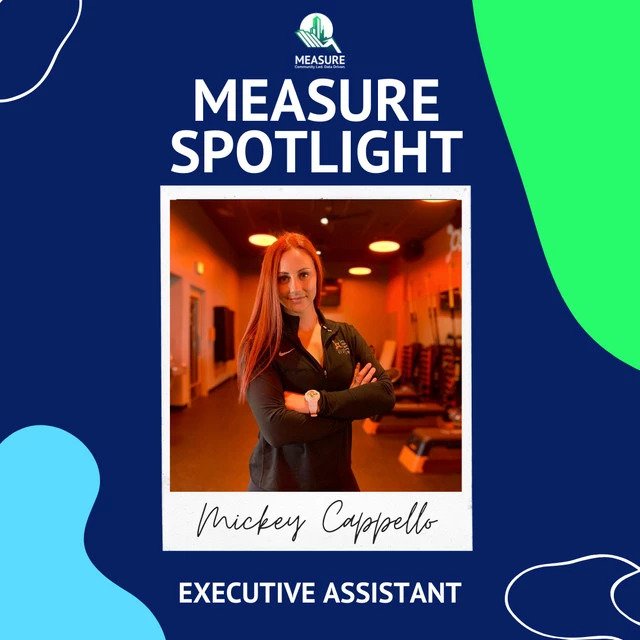
Our September MEASURE Spotlight is Mickey Cappello! Follow Mickey on IG: https://www.instagram.com/micklespickles96/. Let’s get to know her! Why did you join MEASURE? “I heard Meme speak in an interview regarding the important of data in social justice and the need for education to facilitate change. I was already planning on leaving my current job at the time, was so moved by what she stood for and the work that MEASURE does, I put in my two weeks notice, reached out to her and her team, and here I am helping transform peoples’ lives every single day.” What is your role with MEASURE? “I am MEASURE’s Executive Assistant, primarily supporting our Founder and Vice President. My role has multiple parts to it, from answering general inquiries from the public to organizing our main calendar, managing Meme and Precious’ calendars, assisting volunteers through projects, and leading CARE Teams as a CME through a community survey-tool project. I get to do just about everything!” What is your favorite food? “Salmon any type of way!” What is your Dream destination? “Greece!”